CASE
Raiffeisen Bank
The goal was a data-driven, scalable framework
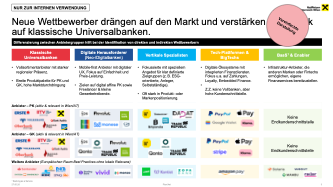
The Raiffeisen Landesbank NÖ-Wien set out to develop a growth-oriented customer segmentation strategy that bridges genuine customer centricity with clear sales and growth objectives. The starting point was a visible gap between the bank’s strategic ambition of customer-centricity and the reality of its market operations. Shifting customer needs, intensifying competition from new market entrants, and a lack of clarity around shared target group definitions made a fundamental new approach necessary.
The goal was a data-driven, scalable framework that systematically places customer needs at the centre and enables more effective market activation.
OUR APPROACH
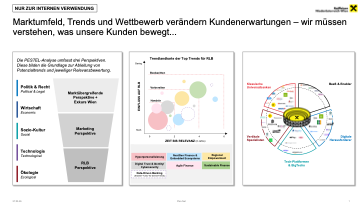
The focus was on building a holistic customer segmentation strategy that connects market potentials with concrete activation logic. The foundation was a rigorous analysis of market, customer, and competitive data to identify relevant target groups and growth opportunities.
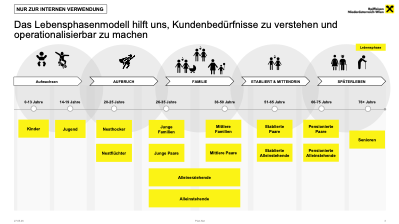
This informed the development of a strategic segmentation model that integrates life stages, needs, and market potentials within a shared logic – creating a unified frame of reference across marketing, sales, and product. Complementing this, organisational, process-related, and technological prerequisites for customer centricity were assessed, surfacing key areas for further development.
IMPLEMENTATION
The project unfolded across three connected phases. In the status-quo analysis, internal customer data, qualitative interviews, market studies, and competitive research were synthesised to identify relevant growth fields.
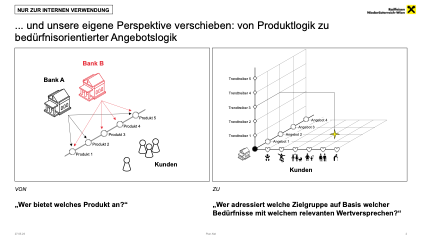
This revealed fragmented target group models, a product-centric steering logic, and significant optimisation potential within existing customer journeys. On this basis, an integrated segmentation model was developed that connects market potentials, life stages, and customer needs within a unified logic.
In the second phase, key life moments and the underlying needs of each target group were systematically identified, prioritised, and translated into a customer journey framework. Along each phase, concrete use cases for customer acquisition, activation, and retention were derived and sharpened with the client team.
Finally, the project demonstrated how customer centricity can be embedded in a cross-functional collaboration model – laying the foundation for a consistent, data-driven alignment of marketing and sales activities.